
The Infrastructure Nobody Else Is Building
Why Volusia Market Isn't Just Another Local Business Directory
Every small business advertising platform on the market today does the same thing: it sells you a listing, runs your ad for a while, and forgets you existed the moment the campaign ends. Your photos disappear into some third-party cloud bucket. Your ad copy gets thrown away. Your results live in a PDF report nobody reads twice. Next month, you start from zero again.
That's not a technology limitation. That's a choice — and it's the wrong one.
We built something different.
The Core Idea: A Business Should Never Start From Zero
Every ad a business runs, every photo they upload, every idea they mention, every result their campaign produces — all of it should accumulate. It should build into something. A growing record of what works, what doesn't, and who this business actually is.
Most platforms throw that knowledge away by design, because they were never built to keep it. We built ours the other way around: keep everything, organize it by business, and put it to work.
That decision is the foundation of everything else.
VC1: One Media Engine Powering an Entire Ecosystem
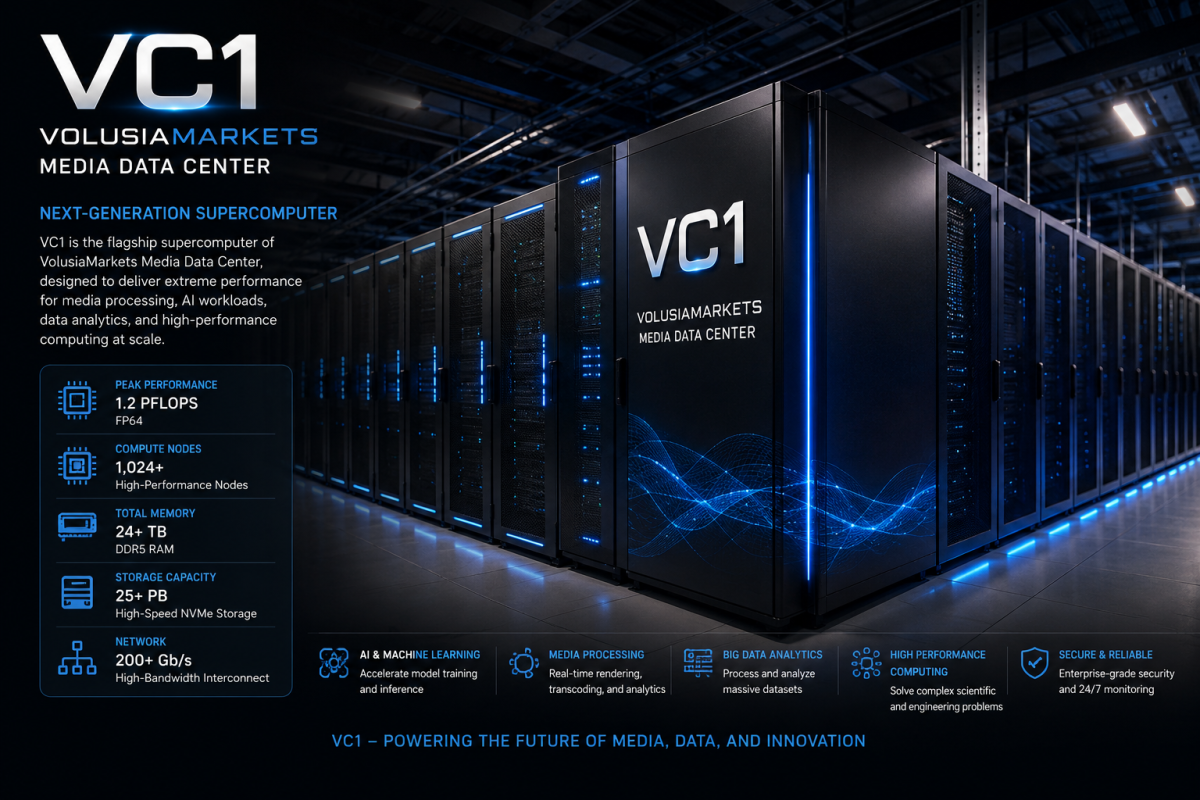
At the center of the Localad network sits VC1 — a dedicated media server we built from the ground up, running on real hardware we own, not rented space in someone else's data center.
Here's what makes it different from "just a place to store pictures":
One system, every platform. Instead of each site — VolusiaMarket, PetBlip, ForumLA — managing its own uploads, thumbnails, and storage logic independently, they all feed into a single centralized media core. The websites become simple frontends. VC1 is the infrastructure underneath all of them.
Nothing gets lost, and nothing gets orphaned. Every single asset — photo, video, document, idea — carries full metadata: where it came from, what platform it's on, what it's being used for, and how many places reference it. Delete something by accident? The system knows exactly what depends on it before you touch it. Nothing silently breaks.
Metadata is the whole game. Media without classification becomes an unmanageable, contaminated pile — the same failure mode every legacy platform eventually hits. Every file in our system knows its type, its origin, its purpose, and — critically — which business it belongs to. That last part is the piece nobody else builds, because most platforms never had to. We do, because we're not selling ad space. We're building a record.
Businesses never touch the plumbing. A business owner never needs to know or care where a file physically lives, what server it's on, or how it's encoded. They see their content. The system handles everything underneath — which means we can upgrade, migrate, or scale the infrastructure at any time without anyone's business breaking.
This isn't theoretical. It's running today, encoding real video, serving real streams, holding real business assets — built on hardware we own, in a facility we control, answerable to no cloud vendor's pricing changes or policy shifts.
The Part Nobody Else Has Built: A Private AI Memory, Per Business
Here's where it goes further than "centralized storage."
Every business on Volusia Market has its own growing knowledge folder — every Spotlight Ad, every idea, every concept discussed, every performance result, all organized under that one business. Not a shared database row buried in a spreadsheet somewhere. A living record, built specifically for that business, that grows every time they run a campaign.
And that folder isn't just for looking at. It feeds a private AI assistant that belongs to that business alone.
When a business owner opens their account, the AI already knows their brand voice, their last five campaigns, what worked, what didn't, and what they were thinking about trying next. They're not starting a conversation with a generic chatbot. They're picking up a conversation with an assistant that has actually been paying attention to their business — because it has been, the whole time, in the background.
No other small business advertising platform does this. The big ad platforms — the Googles, the Metas — sell you data collection and call it insight. They study you to sell you more ads. We're building the opposite: an assistant that works for the business, owned by the business, powered by the business's own history, running on infrastructure we control and they can trust.
Why This Matters — And Why It's Hard to Copy
Anyone can rent cloud storage and slap a chatbot on top. That's not what this is.
What we've built required:
- A unified media architecture that treats every asset — across every platform in the network — as part of one coherent, queryable system, instead of four separate silos duct-taped together.
- A metadata discipline rigorous enough that a business's entire history can be reassembled on demand, instantly, without manual digging.
- A business identity layer that exists independently of any single website — so a business's presence on PetBlip, VolusiaMarket, and ForumLA can eventually be recognized as the same business, not three disconnected accounts.
- Infrastructure we physically own — meaning no rented API is one policy change away from breaking this, no vendor can price us out, and no platform decision made in Silicon Valley can quietly end the relationship we've built with local businesses.
This is the kind of system that only gets built by someone who has spent years in the guts of the infrastructure — who understands that the real product isn't the website, it's the pipeline underneath it. That's not a marketing claim. That's an engineering fact about how this was built, one server, one table, one hard-won debugging session at a time.
The Bigger Picture
This was never just about hosting images.
Every business that joins Volusia Market gets something no directory listing, no boosted post, and no big-tech ad account has ever given them: a permanent, growing, private record of their own advertising history — working for them, owned by them, remembered forever.
That's not a feature. That's a different category of product.
Small businesses have spent a decade being told the only way to compete online is to hand their data, their ad spend, and their customer relationships over to platforms that owe them nothing. We think that's backwards.
Show your work. Qualified by results. That's always been the standard here. VC1 — and everything built on top of it — is what makes it possible to actually keep that promise, campaign after campaign, for every business that signs on.